Are Dopamine Sites Safe? The Warning Signs That Matter
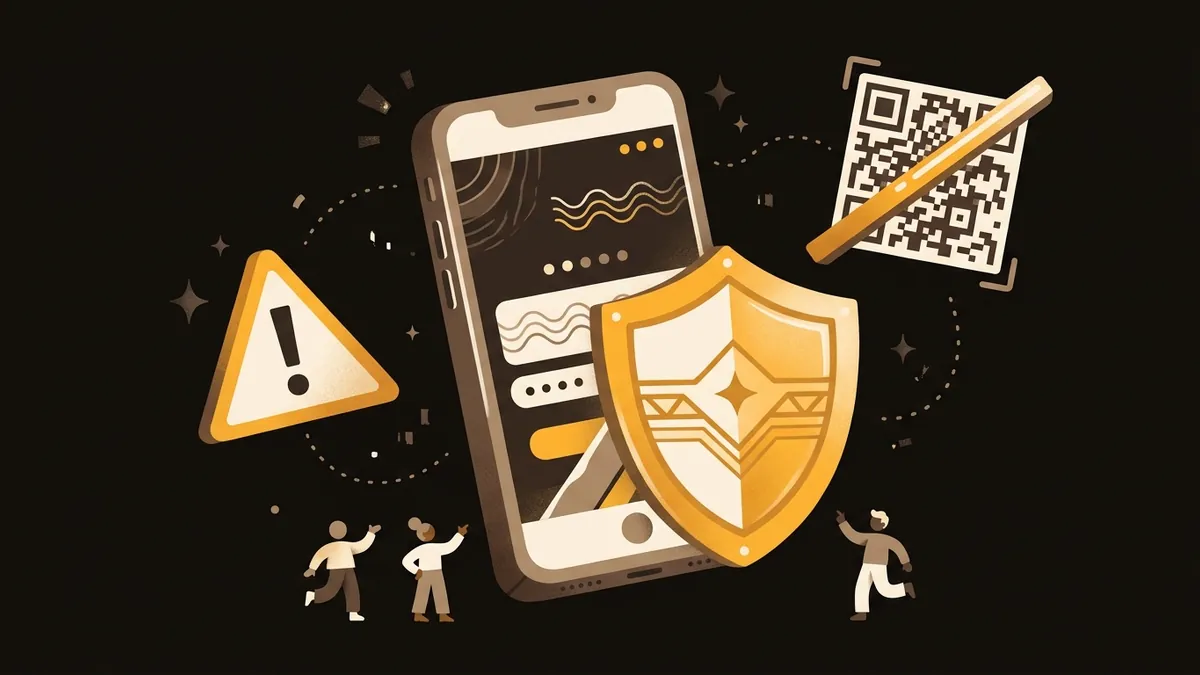
An honest dopamine site is about as safe as any game: you build the order, confirm it, and nothing leaves your account. The risk is in imitations that borrow the trend to collect real money. The good news is that the warning signs are concrete, and you can check each one in a few minutes.
The one rule that settles most questions
A dopamine site, or dopamine app, sells the feeling of buying without the purchase. If the order is pretend, the payment has to be pretend too. That is why the most useful rule fits on one line: a fake purchase never asks for real money. No payment QR code, no account number to send money to, no card form, no banking details.
That does not mean every service of this kind has to be free. Some charge a subscription to unlock features, such as more pretend orders per day or extras. The difference is where and how the charge happens: on a plans page, with the price written out, through an app store or a well-known payment provider, and never disguised as "payment for your order" in the middle of the game.
Hold on to that distinction. A declared subscription is a product you choose to buy or not. A charge at the checkout of a pretend order is a contradiction, and a contradiction at that exact point is usually a scam.
The warning signs, one by one
A QR code or payment request at the end of the order. This is the most serious sign. If the "payment" screen produces a code that your banking or payment app recognizes, it is charging you for real, however playful the rest of the site looks. Close the page.
A card form or a request for banking details. A field for a card number on a fake shopping site is an invitation to type in a real card. There is no technical reason to ask for one in a simulation.
A request for your Social Security number or other ID numbers. A simulator does not issue invoices or run credit checks. If it wants an ID number so you can "order food for free", ask why, and when in doubt do not give it.
A redirect to betting. If finishing the order drops you on a page for online casinos, sports betting or a "little game" that asks for a deposit, the dopamine site was only the front door. Leave and do not sign up.
No mention of being simulated. An honest service says early, and without fine print, that nothing will be charged for the food and nothing will be delivered. If you have to dig through the terms of service to find out, be suspicious.
The case that made the news
The warning is not theoretical. In 2026, the Brazilian outlet InfoMoney reported that a Brazilian site presenting itself as a "dopamine site" generated a real payment QR code when users tried to finish their order. According to the report, the site also sent people to pages imitating betting sites.
The case shows how the trend can be turned against the people who join it. Someone arriving at such a site expects to pay nothing, drops their guard exactly at the payment screen and, out of habit, points their phone at the code. The scam exploits the reflex of someone who has ordered delivery many times.
The defense is the same rule as above: in a pretend order, anything your bank or payment app can read is a real charge. If it happens to you, contact your bank or card issuer as soon as possible and keep every receipt.
What data it makes sense to hand over
A food delivery simulator needs very little. An address is used to place the fictional restaurants near you and draw the courier's route on the map; without it the map is no fun. A phone number or email is used to create the account and keep your history. For anything beyond that, ask why.
Read the privacy policy with one question in mind: what happens to my address? It should be used to build the map and nothing else, not sold and not used for ads. If there is no policy, or it is generic text that never mentions the service, that is already an answer.
Ads deserve their own look. A site that lives on advertising has an incentive to keep you clicking and may show ads for easy credit or betting, which pair badly with someone trying to spend less. It is not forbidden, but it is worth knowing who pays for the site.
What SemFood does, and what it never does
SemFood is a food delivery simulator: the restaurants are fictional, the order is simulated, nothing is charged for the food and nothing is delivered. Before every order, a confirmation sheet repeats that and asks if you want to continue.
At checkout, paying by card or cash is part of the staging. No payment code is generated, there is no field to type a card number (the SemFood card is drawn on screen, with a number that belongs to no card network) and nothing leaves your account. The account asks for a phone number and password, never an ID number, and the app shows no ads.
The paid plans are optional and are bought through the app store or on the plans page, with the price stated, never in the middle of an order. To understand the whole flow, see how it works. If you are curious about the effects of these sites, read do dopamine sites work, or are they addictive?, and to compare the pretend order with the real one, the calculator shows what delivery would really cost at your pace.
Can a dopamine site charge me?
An honest dopamine site does not generate a payment code or ask for transfer details for the pretend order. If your banking app can read the code, the charge is real: close the page.
Why would a dopamine site ask for my address?
To place the fictional restaurants near you and draw the courier's route on the map. An address makes sense; an ID number or banking details do not.
Does SemFood charge anything?
Nothing is charged for the food and nothing is delivered. There are optional paid plans, bought through the app store or the plans page, never inside an order.
I landed on a dopamine site that charged me for real. What now?
Contact your bank or card issuer as soon as possible, report the transaction and keep the receipts and the site's address.